N.R. Narayana Murthy is a man who has sat through thousands of lectures. He co-founded Infosys. He has advised prime ministers. He sat through the AI Summit in Delhi just days before this session — where, by his own account, there were "zillions of fellows" and he "very respectfully declined" to stay. Too many speakers, too little signal.
So when, near the end of a two-hour workshop at the National Institute of Engineering in Mysore — his alma mater, a place he had not visited in almost 60 years — he leaned forward and said those words, the room fell silent.
"This is the finest lecture I have heard in the last so many years." — N.R. Narayana Murthy, Co-founder, Infosys · NIE alumnus
He was not talking about his own remarks. He was talking about a workshop delivered by two people: Srikanth Nadhamuni, co-founder of Trustt and member of India's AI Centers of Excellence apex committee; and Anand S., who describes his day job as "LLM Psychologist" at Straive — and who rarely gives static presentations because he prefers to code live in front of the audience.
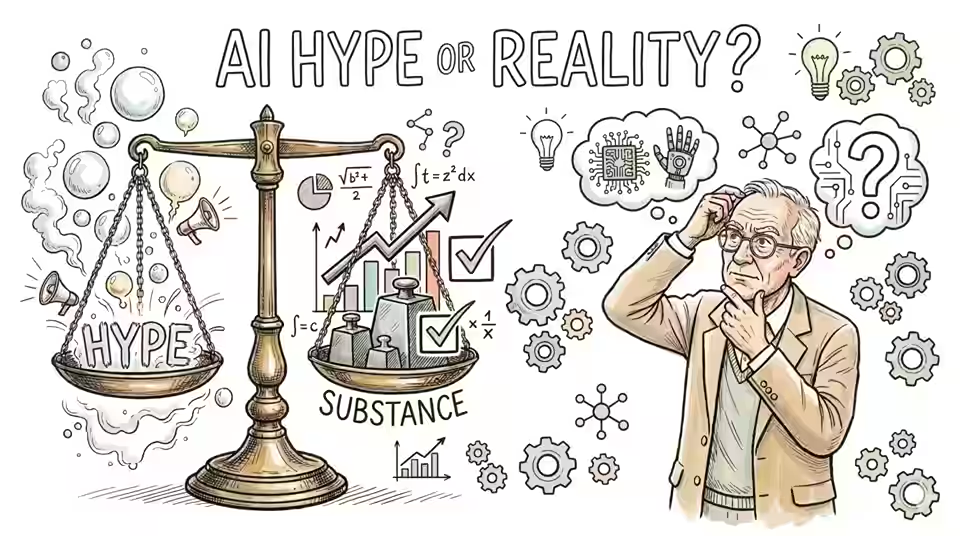
The question they had been invited to answer was deceptively simple: Is AI hype or reality? And if it is real, what does it mean for an engineering college in Mysore? The answer, as it turned out, had implications far beyond Mysore.
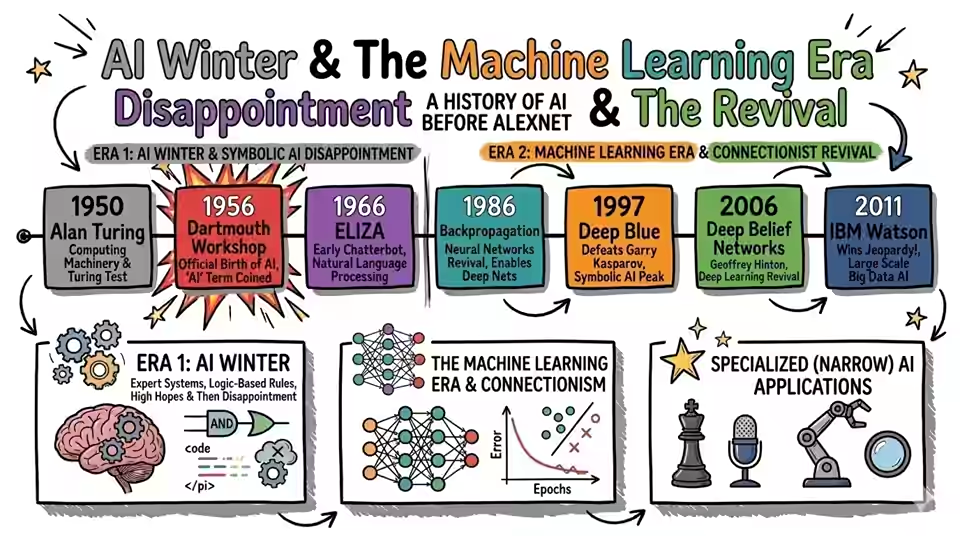
A Brief History of a Very Long Disappointment
Srikanth began where all honest AI conversations must begin: with failure.
The dream of thinking machines is older than most people realize. Alan Turing proposed his famous test in 1950. The perceptron — the primordial ancestor of today's neural networks — appeared in 1952. And yet, for decades, the field lurched between euphoria and what researchers grimly call the "AI Winter."
The reason for the freeze? The first approach to AI was built on rules. Programmers would laboriously encode human knowledge: if the animal has whiskers and four legs and meows, it is a cat. If it barks and wags its tail, it is a dog. These "expert systems" worked beautifully in controlled environments and collapsed the moment reality got complicated.
"If a cat is under a carpet and only the tail is sticking out, you can't find out — because those rules don't fire. Whereas human beings, even if you see a tail coming out of a carpet, you know this is a cat." — Srikanth Nadhamuni
The solution was hiding in plain sight since 1952. Instead of writing rules, what if you just showed the system millions of pictures of cats and dogs — with the correct answer — and let it figure out the rules itself? This is the neural network approach: learn from data rather than be programmed with knowledge.
It worked. Slowly at first, then all at once.
The Paper That Changed Everything
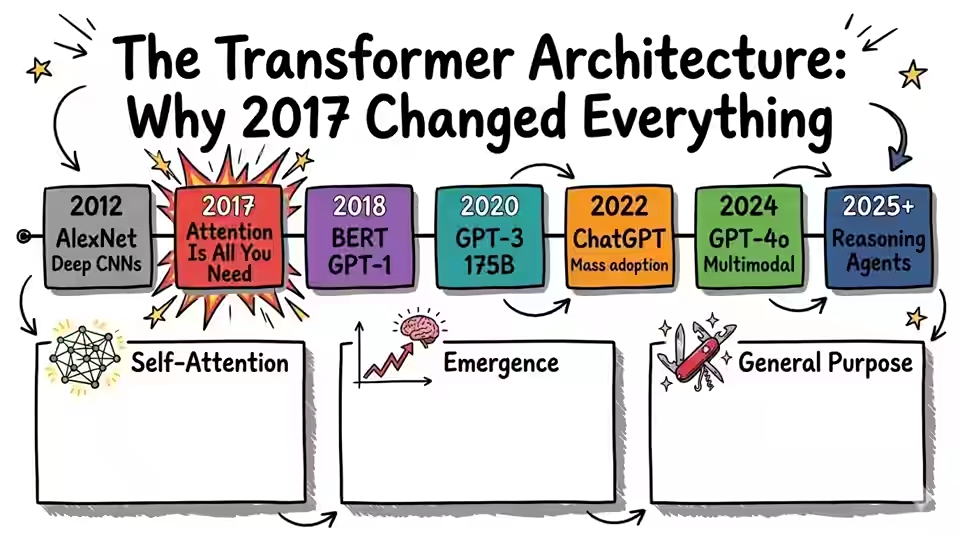
Then came 2017. A team at Google published a paper called "Attention Is All You Need". The lead author was an Indian: Ashish Vaswani. The idea was elegant and radical.
Take the sentence: "I live in Mysore, I can speak ___ fluently." Every human in the room instantly knows the answer is Kannada. But how does the machine know? Previous approaches tried to process every word with equal weight. The new idea — the Transformer — said: only two words actually matter here. Mysore. Speak. Pay attention to those, ignore the rest, and you will get it right.
That insight — selective attention — unlocked something nobody had fully anticipated. By 2022, ChatGPT arrived and shocked the world. A machine could hold a conversation, understand nuance, respond to emotion. The AI Winter was over. A new era had begun, faster than anyone expected.
What Can AI Do Today?
Srikanth did not present these as curiosities. He presented them as a reckoning. "Not only is it smart, it is getting smarter very, very fast. In many areas, it's doing better than human beings." The management committee had asked whether AI was hype. These numbers were his answer.
From Sixth Grader to Tenured Professor — in 24 Months
Anand took the same story and made it visceral. He pulled up a live chart — one he had built himself — and walked the room through the last two years of AI capability. The x-axis was time. The y-axis was intelligence, anchored to human milestones everyone recognized: Grade 8. College. Master's. PhD. Tenured Professor.
AI Intelligence & Cost · March 2023 → June 2025
Source: LLM Pricing tracker (built by Anand) · Intelligence levels per MMLU/GPQA benchmarks
"In two years, it has covered what humans would have taken ten or twelve years to cover. In other words, Artificial Intelligence is growing up faster than humans are growing up in their intelligence. Any human." — Anand S.
And then came the number that made the faculty lean forward: the cost.
In September 2024, giving an AI model the equivalent of a thousand books to analyze cost roughly $15,000. By January 2025, when DeepSeek-R1 arrived from China, that same analysis cost $500. By June 2025, with Gemini 2.5 Flash, the price had fallen to $150. A hundred times cheaper in a year. For the same budget, you could go from hiring one analyst to hiring a hundred.
"The economics of this is changing dramatically. While AI capabilities are increasing faster than humans, their cost is falling roughly ten times a year. Which is phenomenal." — Anand S.
Sorting the Signal from the Noise
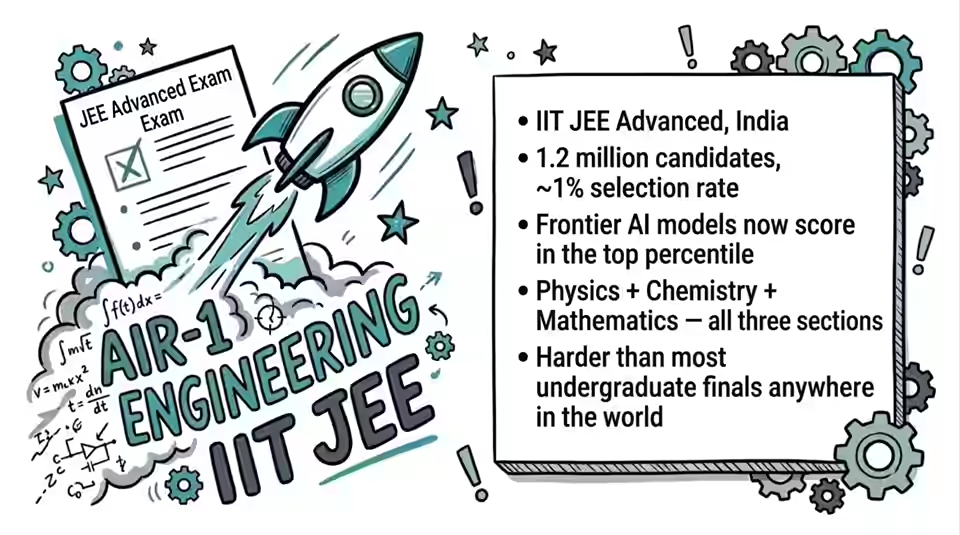
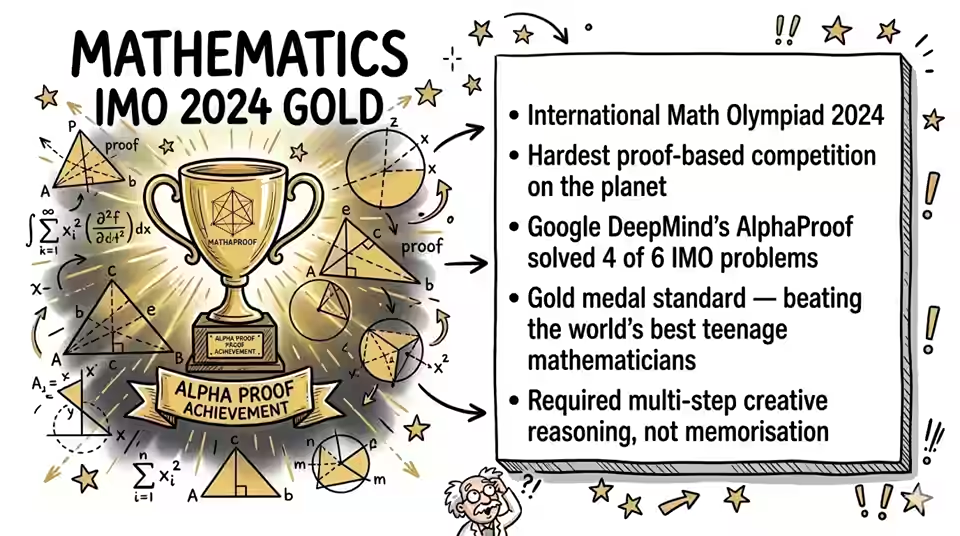
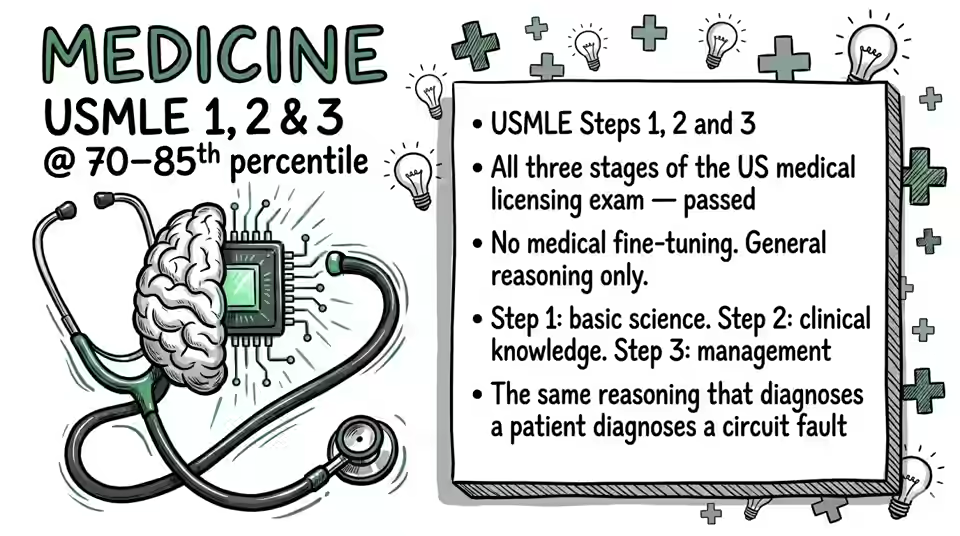
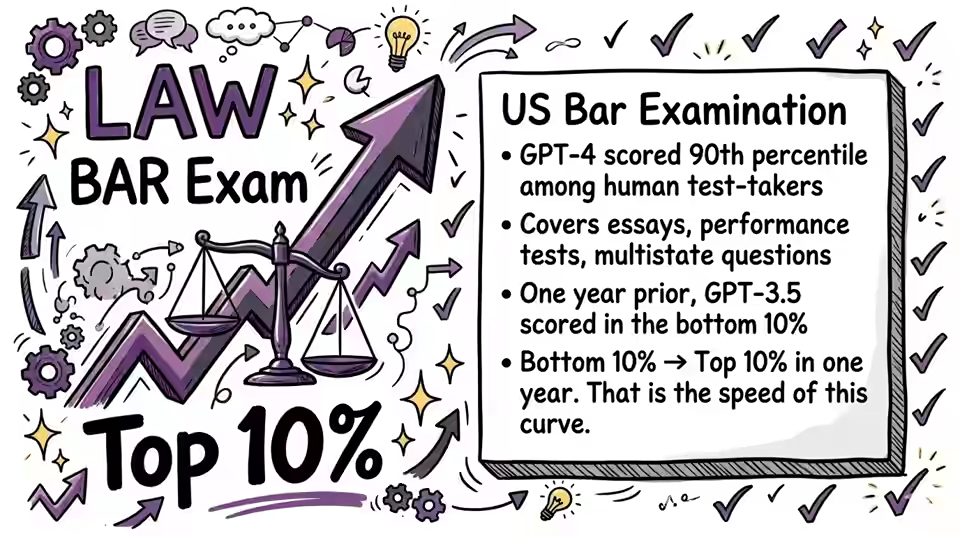
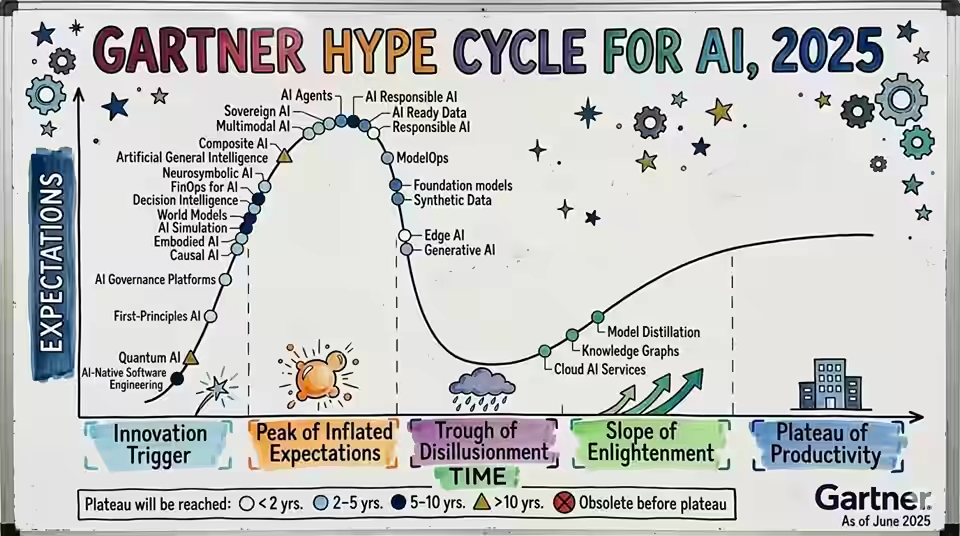
This is where Srikanth made a careful distinction. The AI CEOs promising 20–30% GDP growth? That's Peak of Inflated Expectations territory on the Gartner Hype Cycle. But IIT JEE AIR 1, International Math Olympiad near-gold, USMLE pass? That's not hype. That's documented, repeatable reality.
💡 Insight
The hype and the reality coexist. Dismissing AI as hype misses the real capabilities. Believing every CEO promise sets you up for disappointment. The pragmatic path: track specific benchmarks, not general claims.
Anand pulled up the OpenAI expert-comparison study. Its message was blunt: in some professions, AI is already beating the world's best human experts. In others, humans still have the edge. The visualization mapped every major US profession by total salary paid — the bigger the box, the bigger the payroll — color-coded green where AI wins and red where humans still lead.
Software developers: a quarter-trillion dollars in annual US salaries. And the box? Green. AI is already beating top human coders. Accountants and auditors? Humans still lead. Personal financial advisors? AI is better.
"I look at this, then I ask: should I hire an AI? Should I hire a human? For personal financial advice, it said AI is better. So my next investment, I went straight to ChatGPT." — Anand S.
The Existential Question in Room 202
At this point, the management committee of NIE could see where the argument was heading. And it was uncomfortable.
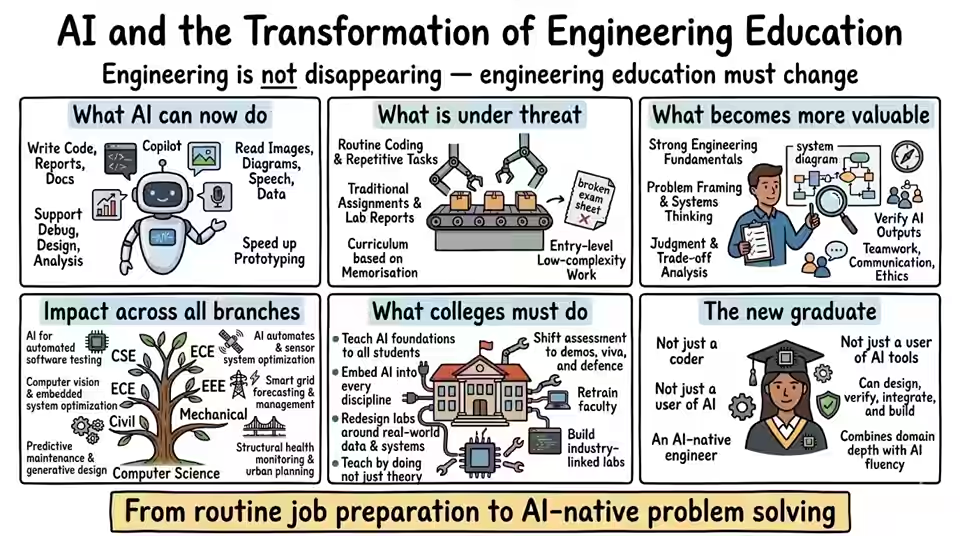
The cycle that sustains every engineering college is elegant and self-reinforcing: train students well → place them in good jobs → maintain reputation → attract better students. But if AI can do the work of junior engineers — and Srikanth rattled off a list of CEOs who had said exactly that, from Satya Nadella to Jeff Bezos to Jack Dorsey — then where does that leave engineering graduates?
"This is not an NIE-only problem. This is not just an India problem. This is a global problem, and we all have to grapple with it." — Srikanth Nadhamuni
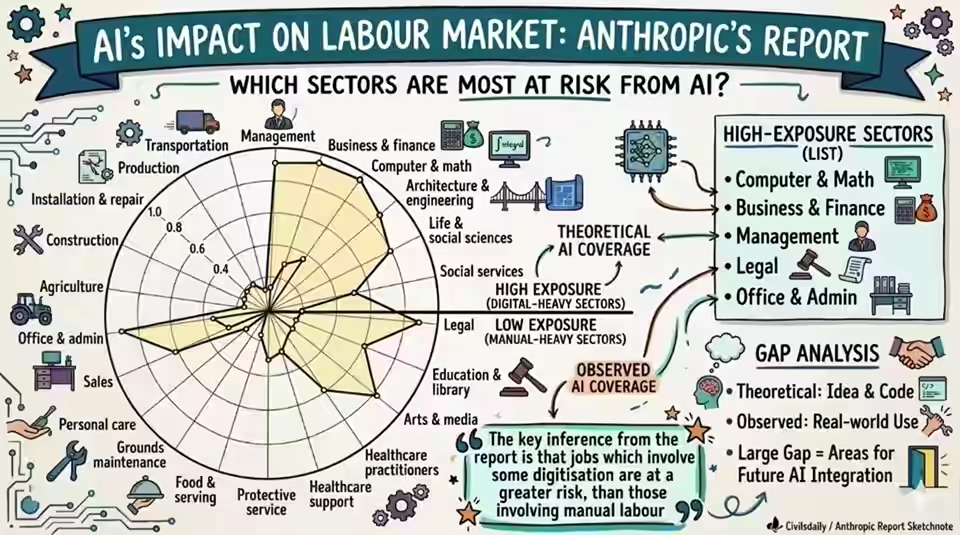
The Anthropic Economic Index, published just two days before the talk, identified the sectors most at risk: management, business and finance, computer science, architecture and engineering. In other words: the disciplines that NIE teaches.
And yet — Srikanth was not preaching despair. He was preaching speed.
🔑 The Key Insight
When calculators arrived in the 1970s, educators panicked that students would become "dullards." What happened instead: arithmetic became trivial, and students moved to algebra, then calculus. The machine didn't replace thinking — it elevated it. AI offers the same shift: from memorization and routine coding, toward problem framing, systems thinking, and judgment.
He listed what the new graduates would need: strong engineering fundamentals (not memorization, but genuine understanding); problem framing and systems thinking; judgment and trade-off analysis; teamwork, communication, ethics. Not just coders who know Python syntax. AI-native engineers.
"In some companies I'm closely watching — our finance department is writing apps by themselves. Not going to the programming department. Not asking developers. They're connecting Excel spreadsheets to Claude Code and solving problems themselves." — Srikanth Nadhamuni
The Professor Who Let Students Copy — and Learned Something Shocking
Here the talk shifted register. Srikanth had been the macro strategist — the view from ten thousand feet. Anand was about to show the view from the classroom floor.
He teaches a course at IIT Madras. His opening policy for assignments is unusual: copying is allowed. Explicitly. What he cares about is not who copies, but who copies from whom, and when.
So he fed all the student submissions to an AI and asked it to map similarity. The result was a social network that no professor had ever seen before.
There was a cluster of 32 students who had submitted exactly the same code. One student — the green node — had submitted first. A yellow node copied next. Then the rest cascaded outward, each copying from those who came before. An entire social graph of academic collaboration, visible at a glance.
But here is what stopped Anand cold: even with permission to copy, nearly half the batch wasn't doing it. Why? Some mix of pride, habit, or social reluctance. And who scored the highest? The answer confounded every intuition.
"The people who are copying first are scoring worse than the people who are copying late. Even in copying, there is strategy and you have to apply your brains for it." — Anand S.
Late copiers could choose from more submissions, pick the best ones, or benefit from corrections made by earlier copiers. Early copiers were stuck with whatever the original had gotten wrong.
But the real shock was at the bottom of the grade distribution: the gray students — those who neither copied nor let anyone copy from them. The isolated ones. The independent learners. They scored worst of all.
"Without collaboration, there is far less learning opportunity. This was a shocker to me. But here is the thing — all of this I learned because AI was doing the analysis." — Anand S.
Srikanth, listening from the screen, shook his head: "I always thought those serious ones who say 'I will do it myself, I don't need to talk to anybody' — I really thought those are probably the brightest ones. It turns out the ones who collaborate end up doing better."
Seven Types of Students — and the 10% Worth Teaching Now
For a separate Python course, Anand went further. He had access to every keystroke students had made during exams — logs of their code, saved every few seconds — and fed it all to an AI.
The AI identified seven student archetypes:
- The Wanderer — builds a partial mental model, gets lucky on easy cases, misses something fundamental, and loops indefinitely through the same mistakes
- The Mimic — hard-codes the specific answer rather than learning the general principle; fails on any variation
- The Ghost — barely present in the data at all
- The Quitter — gives up midway through harder problems
- The Confused, The Crasher, and others — each with distinct fingerprints in the data
But the most powerful thing wasn't categorization. It was what Anand did next — he asked the AI a specific question that most educators never think to ask:
"Give me just the 10% of the teachable students. There are a bunch doing great — don't worry about them. There are a bunch who are very hard to teach — don't worry about them either. I want to intervene in the best possible way. Who are the 10% teachable and what should I teach them?" — Anand S.
The AI came back with a list: 1.7% need to learn basic Python syntax — here are their student IDs, here are the specific mistakes. 4.8% are struggling with debugging — pull them into one targeted session, teach them this. 3.1% have logic errors — one more session.
Not a vague "some students need help." Specific names. Specific gaps. Specific fixes.
"That to me is transformation of education." — Anand S.
Four Slides in Four Minutes: The Curriculum Demo That Stunned the Room
Anand then did something that no slide deck could have prepared the audience for. He said: let's create a new university curriculum, right now, live, in the next four minutes.
He opened Gemini, dictated a prompt:
📝 The Actual Prompt — dictated live
"Create an interactive HTML presentation to teach students key principles in logistics. Use the current context of the US-Iran war as the backdrop. Think about the most important and relevant concepts. Create four pages with animated SVG illustrations, minimal text, and three thought-provoking classroom discussion questions at the end. Give me a toggle to switch between English and Kannada."
Four minutes later: a four-slide interactive presentation on logistics and supply chains, illustrated with animated diagrams, ready for classroom use. Theory of constraints. Choke point vulnerability. Just-in-time failure costs. Switchable between English and Tamil (Gemini guessed Tamil because Anand uses it often — the Kannada request got lost in translation, which got a laugh).
"Four slides in what — four minutes or less? 40 slides will take 40 minutes at the worst case. The bottleneck is just our imagination." — Anand S.
His second demo was quieter but more provocative. He had tasked a college intern — Varun — with feeding an AI the NCERT History textbook (Class 12) and asking it to find errors. The AI scanned 15–20 pages before running out of credits. It found: one factual error, two precision errors, two questionable claims.
The factual error: the textbook claimed "only broken or useless objects would have been thrown away" in ancient societies. Wrong. Archaeological evidence shows that during the Bronze Age, people discarded intact objects as offerings to gods, as gifts before migration, as part of recycling practices. Cambridge research confirms it. A textbook used by millions of Indian students contained an error that an AI found in minutes.
"If we can use AI to find errors in other people's work — and certainly our own work — that is a pretty useful way of applying this." — Anand S.📚
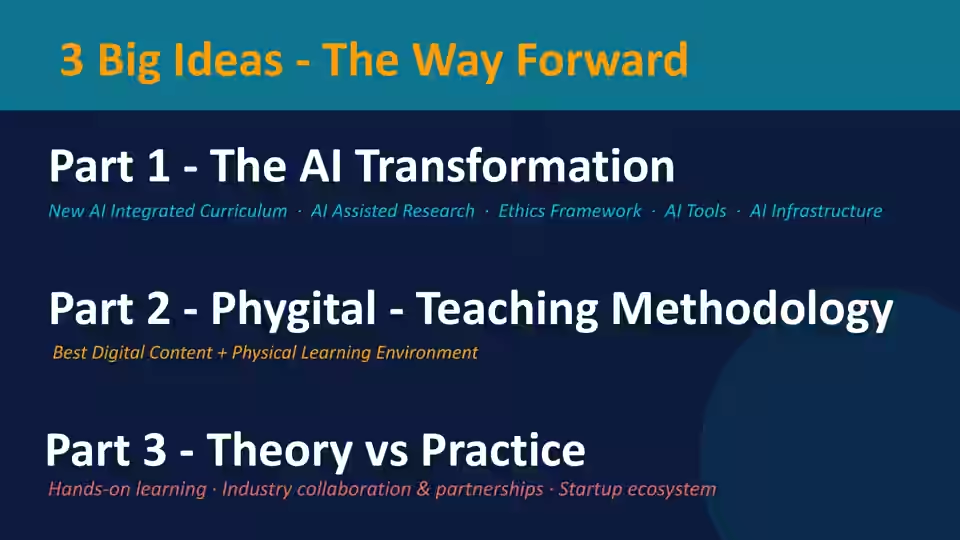
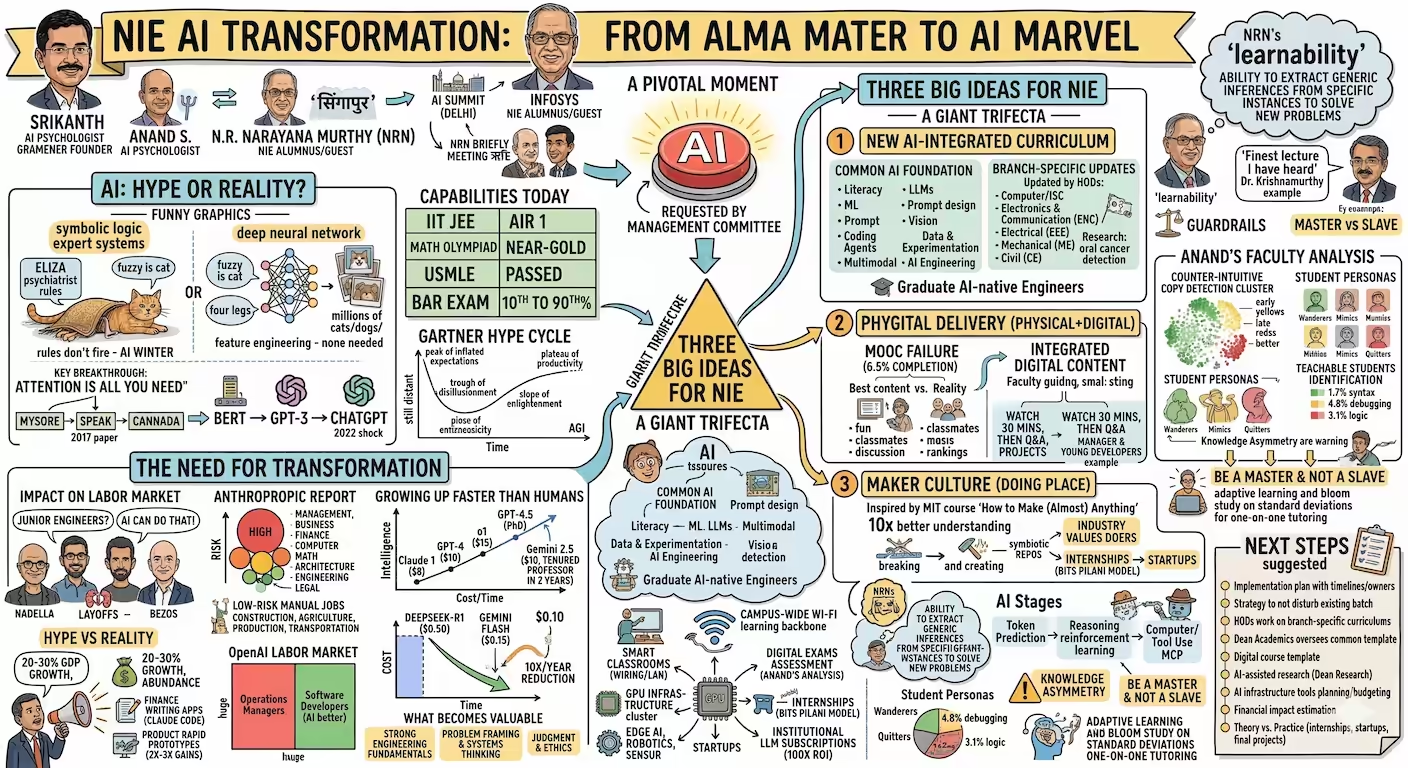
The Prescription: Three Ideas for NIE (and Every Engineering College)
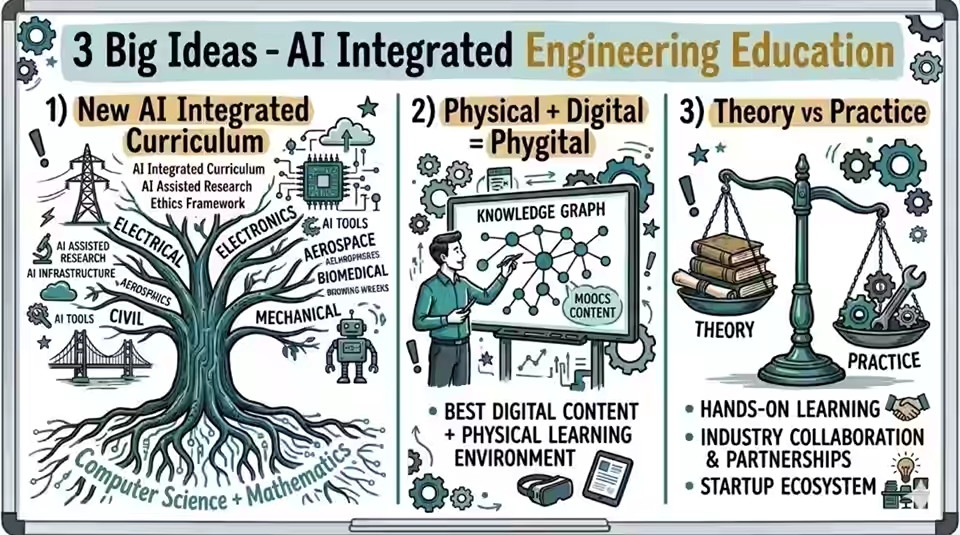
With the ground cleared — AI is real, the stakes are high, the tools are here — Srikanth and Anand laid out three concrete ideas. Not vague aspirations. Actionable bets.
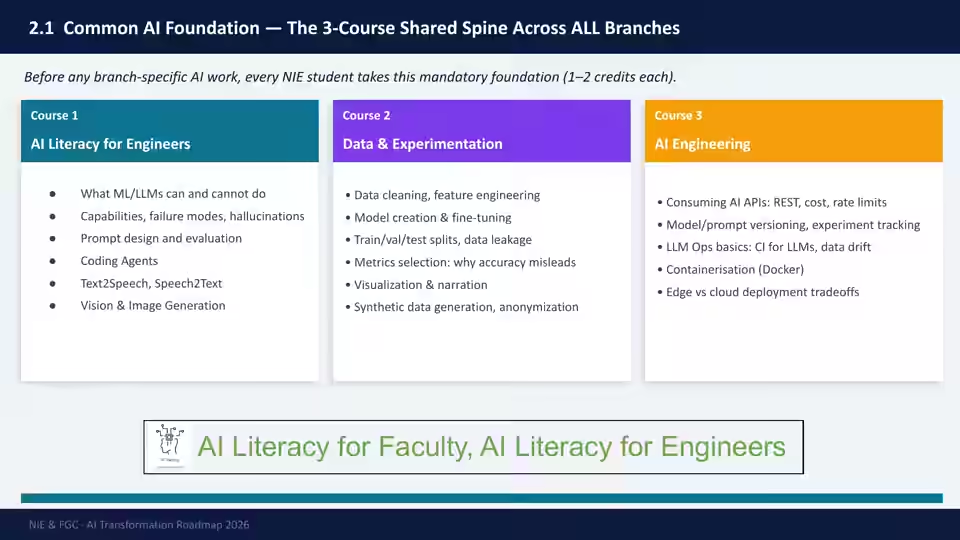
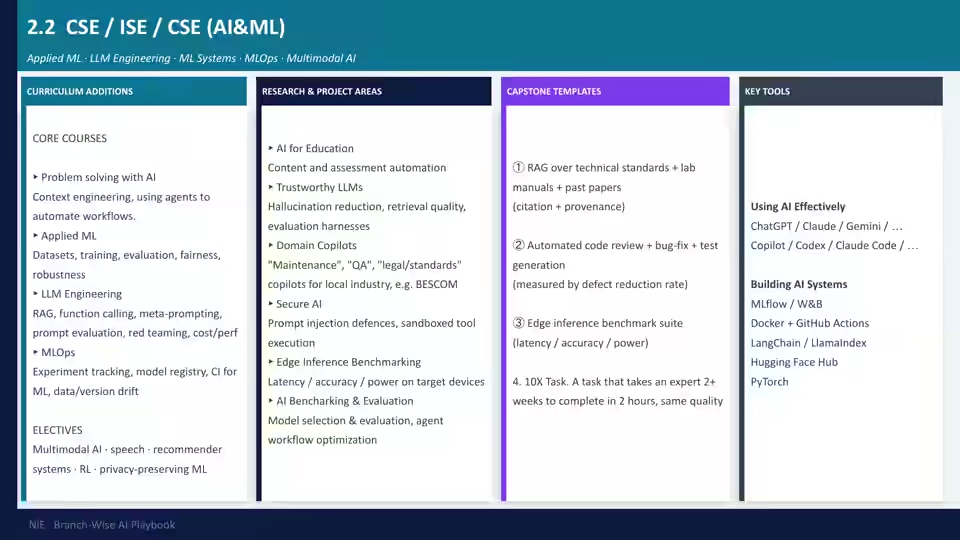
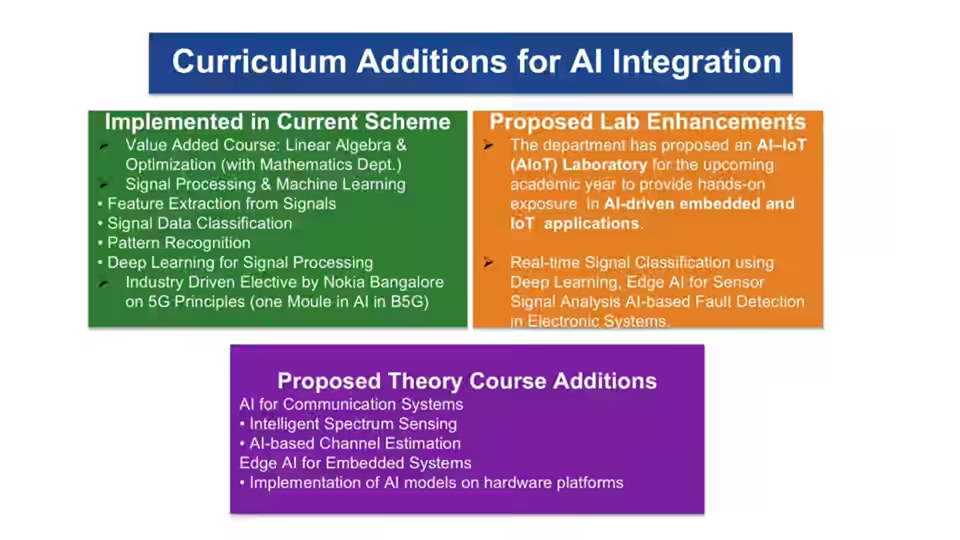
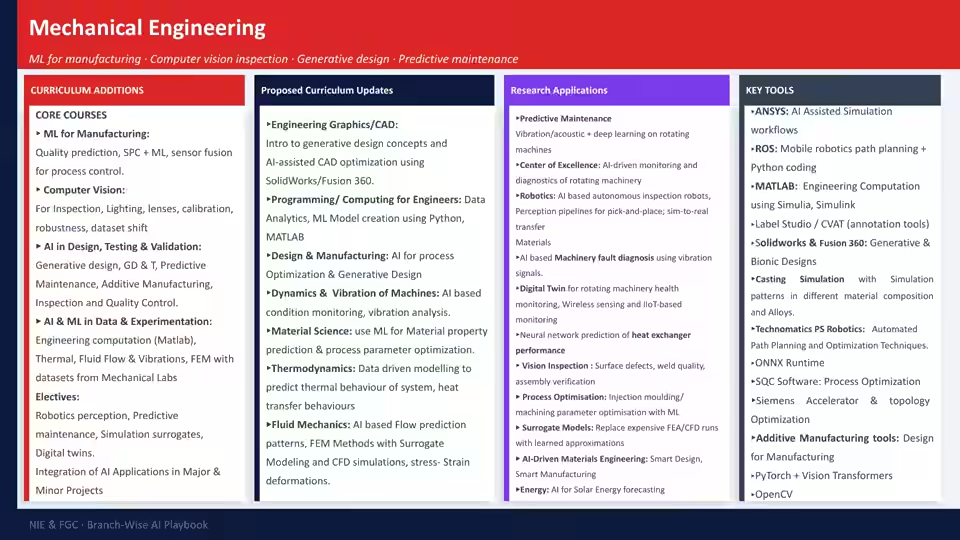
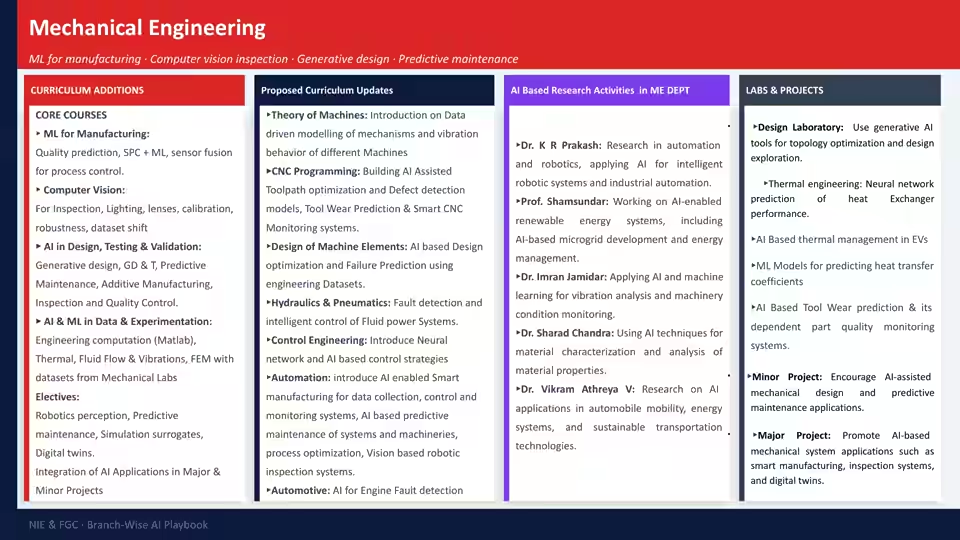
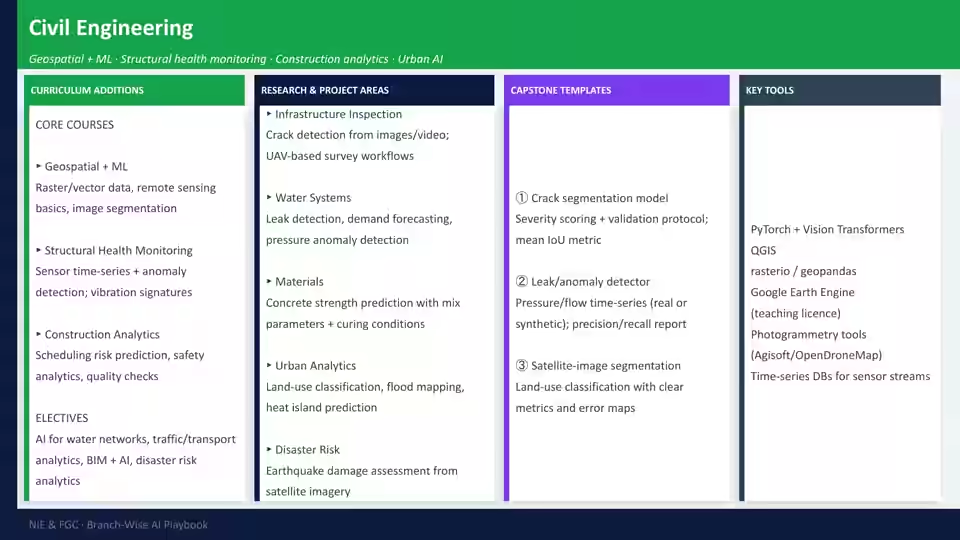
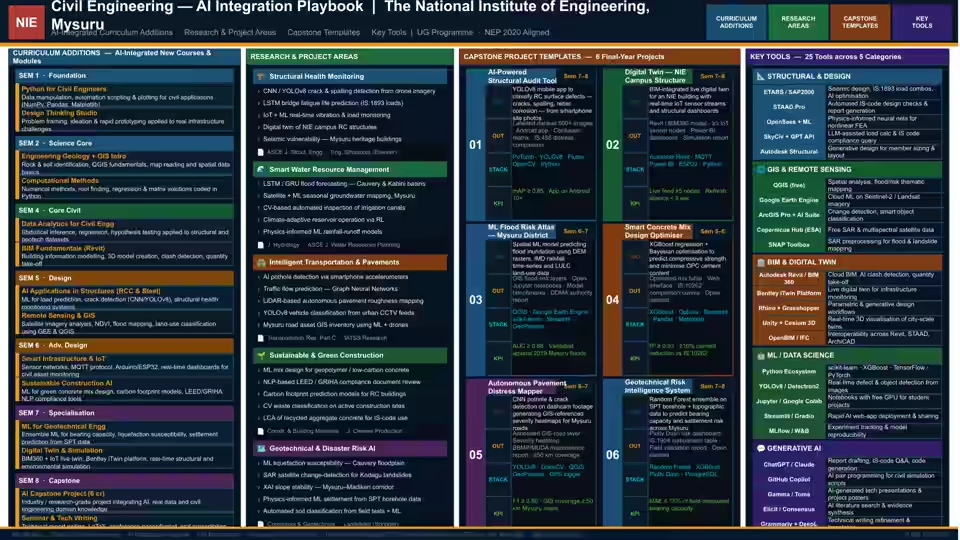
Idea 1: AI-Integrated Curriculum Across Every Department
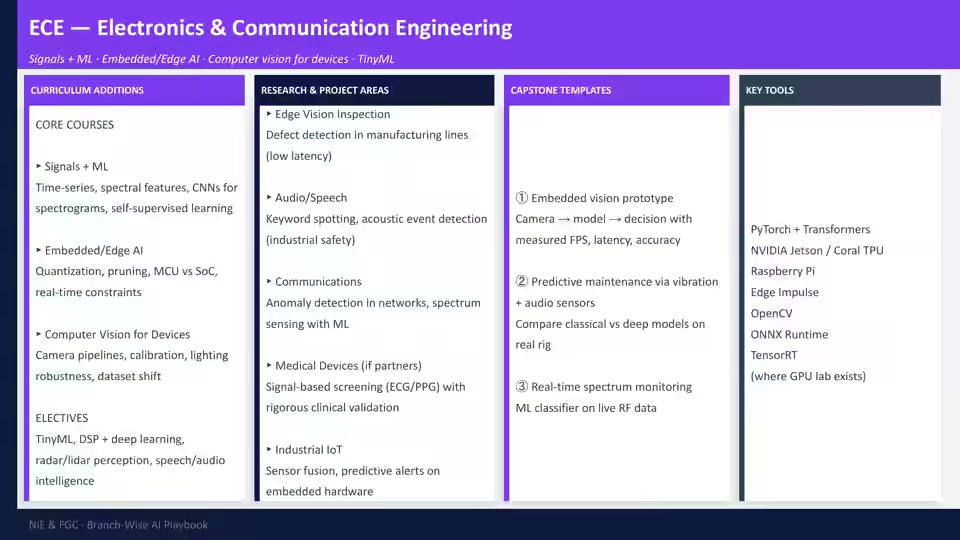
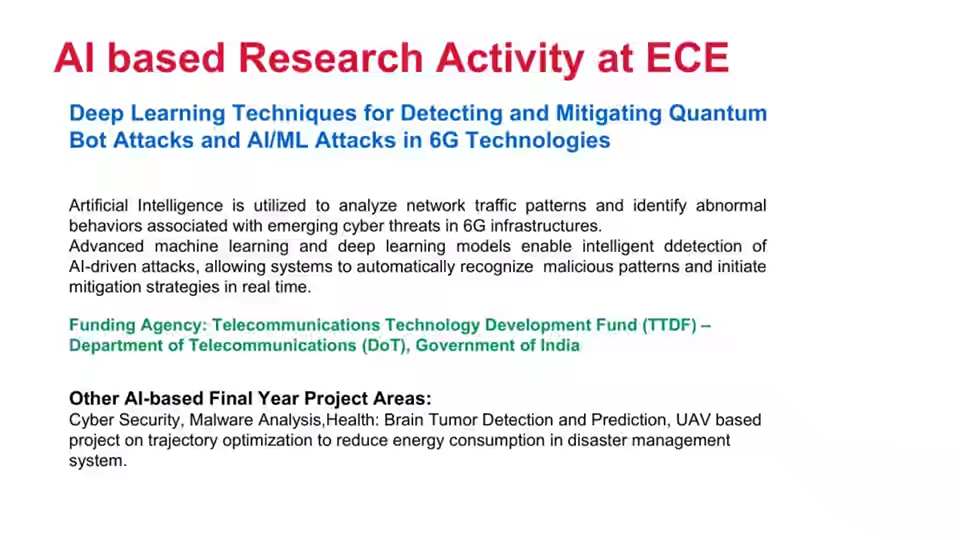
The instinct is to treat AI as a computer science problem. It is not. Civil engineering, mechanical, electrical, electronics — every discipline will be reshaped. A convolutional neural network can detect breast cancer in radiology images. An LLM can draft structural analysis reports. An AI agent can optimize supply chains.
The proposal: every department builds its own AI-integrated curriculum. Not a single AI elective somewhere in the catalogue — but AI woven into heat transfer, fluid mechanics, circuit design, and everything else.
Idea 2: Blend the Physical and the Digital
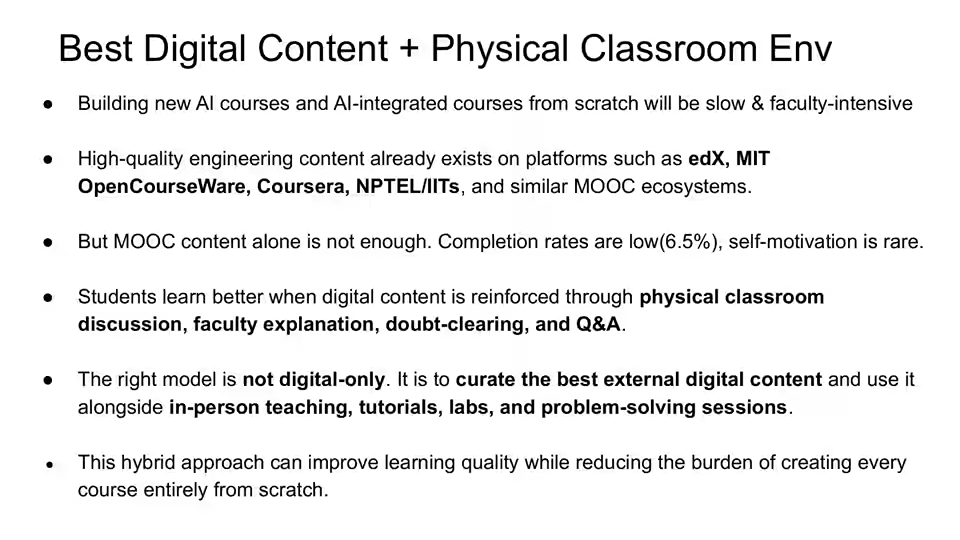
Here Srikanth pointed to a quiet failure that has haunted education for a decade: MOOCs.
"The completion level of MOOCs courses is 6.5%. If we have the best teachers in the world giving the best content, beautifully explained, available any time you want — how come more people are not using it?" — Srikanth Nadhamuni
The answer is not a lack of content. The answer is a lack of community. Exams. Competition. The teacher who answers your question. The classmate who debated you yesterday. These are not inefficiencies to be optimized away. They are the mechanism of learning.
The prescription: don't replace the classroom with Coursera. Integrate Coursera into the classroom. Curate the best 30 minutes of video on a topic. Have the class watch it together. Then discuss, debate, build. The digital content supplies world-class explanation; the physical classroom supplies the social glue that makes learning stick.
"It is not enough if we say, 'Oh, there is wonderful content, there is AI, ask ChatGPT, you learn yourself.' I don't think it works." — Srikanth Nadhamuni
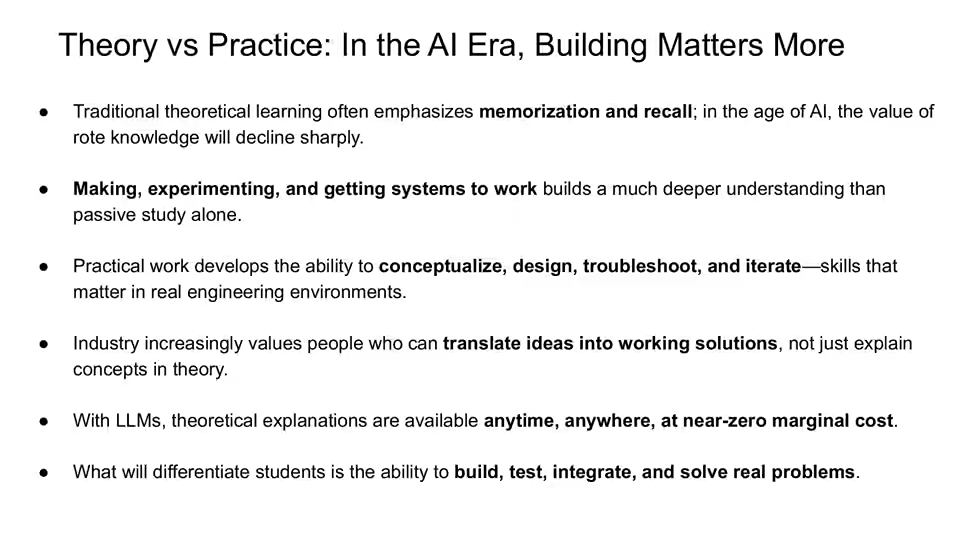
Idea 3: Makers Beat Theoreticians
Srikanth spent three months at MIT in 2025, taking Neil Gershenfeld's famous "How to Make (Almost) Anything" course — laser cutters, CNC machines, embedded controllers, the works. He came back with a conviction that had been building for decades: doing beats reading, every time.
"When we hire people for programming jobs, if somebody tells me, 'Go to my GitHub repo, I will show you what I have built' — very, very interesting to me. Show me how it works. Doers are given much more value than just theoreticians." — Srikanth Nadhamuni
The implication for NIE: shift from evaluating what students know to evaluating what they build. Projects that work in the real world. GitHub portfolios. Prototypes. Final-year projects that actually run.
The Warning That Nobody Wanted to Hear
Near the end, Srikanth stepped off the optimism for a moment. AI's most dangerous risk, he argued, is not that it destroys jobs — it's that it concentrates power.
"I am quite worried that the divide between the haves and have-nots will increase with AI, not decrease. The knowledge asymmetry will worsen." — Srikanth Nadhamuni
India has done something remarkable with its Digital Public Infrastructure — Aadhaar, UPI, DigiLocker — making digital benefits reach the chaiwala and the banana vendor. The same playbook, Srikanth argued, must be applied to AI. Which is why he joined India's apex committee on AI Centers of Excellence, and why projects like an oral cancer detector on a mobile phone — trained at IISc for the smallest village clinic — matter as much as anything happening in Bangalore's boardrooms.
Anand added the classroom corollary: the biggest risk isn't students overusing AI. It's students underusing it.
"Right now, 95% of people are underusing AI. There is probably a 5% that is overusing it. But if AI is going to keep growing, and competition is going to keep using AI more — maybe the bigger risk is underuse." — Anand S.